Courageous advocacy means helping children to understand injustice, speak up for what is right, and take action to make a positive difference in their community and the wider world. It is about recognising when something is unfair, standing alongside those who need support, and using our voices and actions to bring about change. We encourage our pupils to develop compassion, resilience and moral courage so they grow into individuals who care deeply about others and the world around them.
We live out courageous advocacy at our school through our three overarching themes.
Identity & Diversity
We help children appreciate the value of every person and understand the importance of equality, respect and belonging. Pupils learn to challenge stereotypes and celebrate difference. They explore stories, people and issues that highlight the importance of fairness and standing up for those whose voices may be unheard.
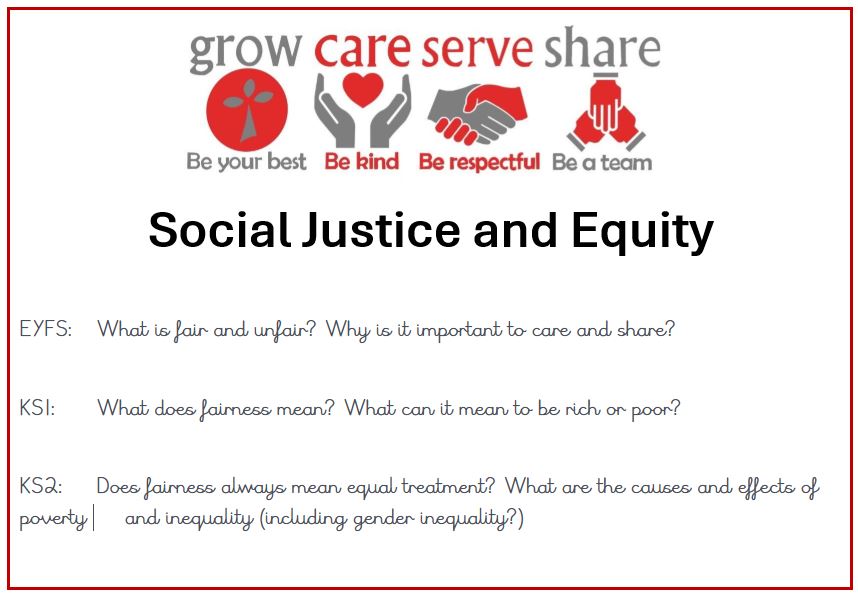
Social Justice & Equity
Children are encouraged to notice when something is unjust and think about how they can take action—whether in school, in the local community or globally. Through learning, discussion and practical projects, pupils develop the confidence to advocate for others and work towards a fairer world.
Sustainable Development
We teach children that caring for creation is an act of responsibility and justice. Pupils engage with environmental issues, make ethical choices and take part in initiatives that protect the planet and support communities affected by climate change and inequality.
Here is an example of some of our work on Social Justice and Equity:
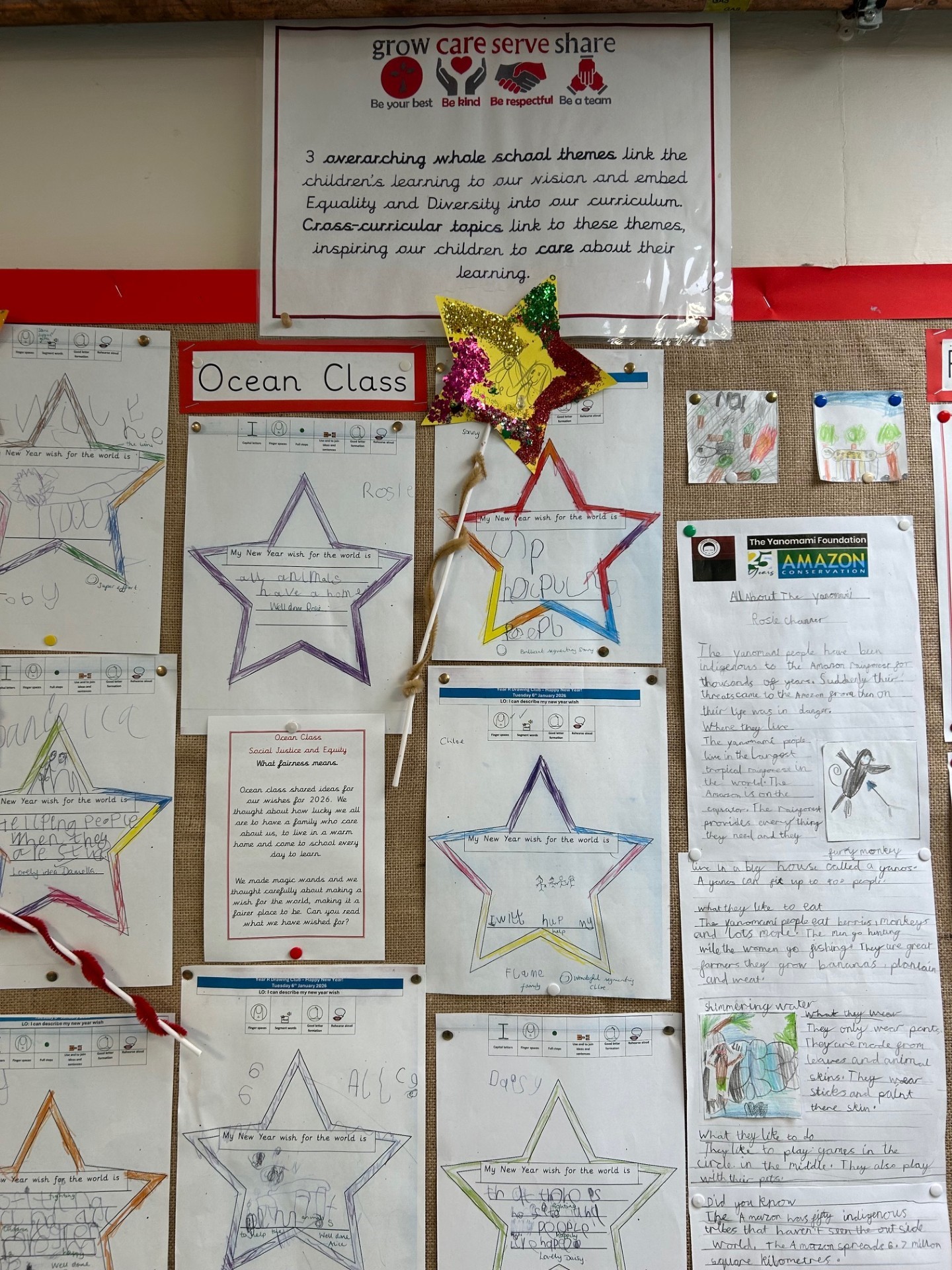
Children in Ocean class (Reception/ Year 1) thought about how lucky they were to have families that cared for them, a warm home and to be able to come to school each day. They made magic wands and thought carefully about making a wish for the world to make it a fairer place.
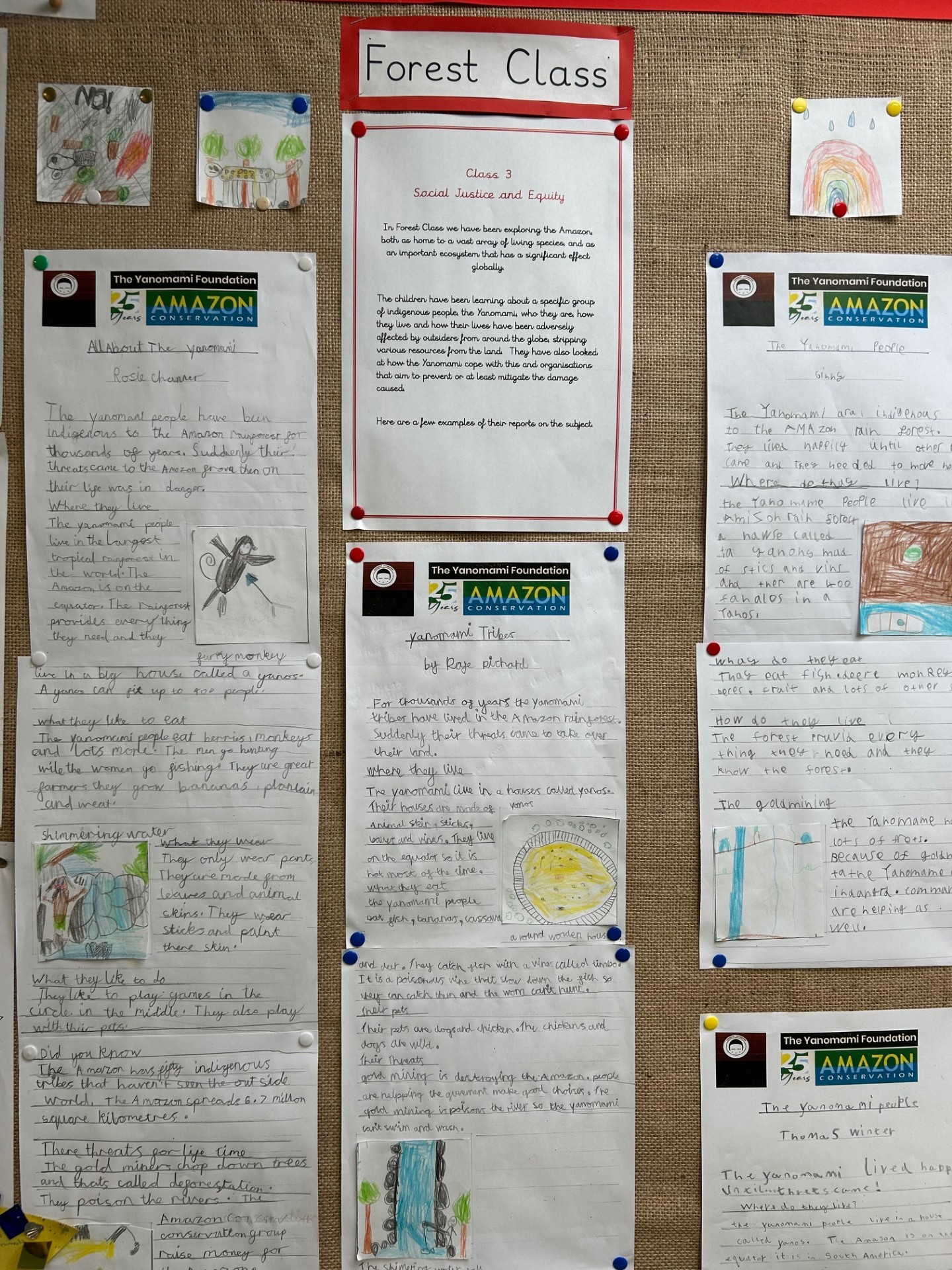
In Forest Class (Year 2) children had been learning about a specific indigenous people in the Amazon called the Yanomami and how their lives had been adversely impacted by outsiders from around the globe. They wrote reports about this and how some organisations have worked to support the community.
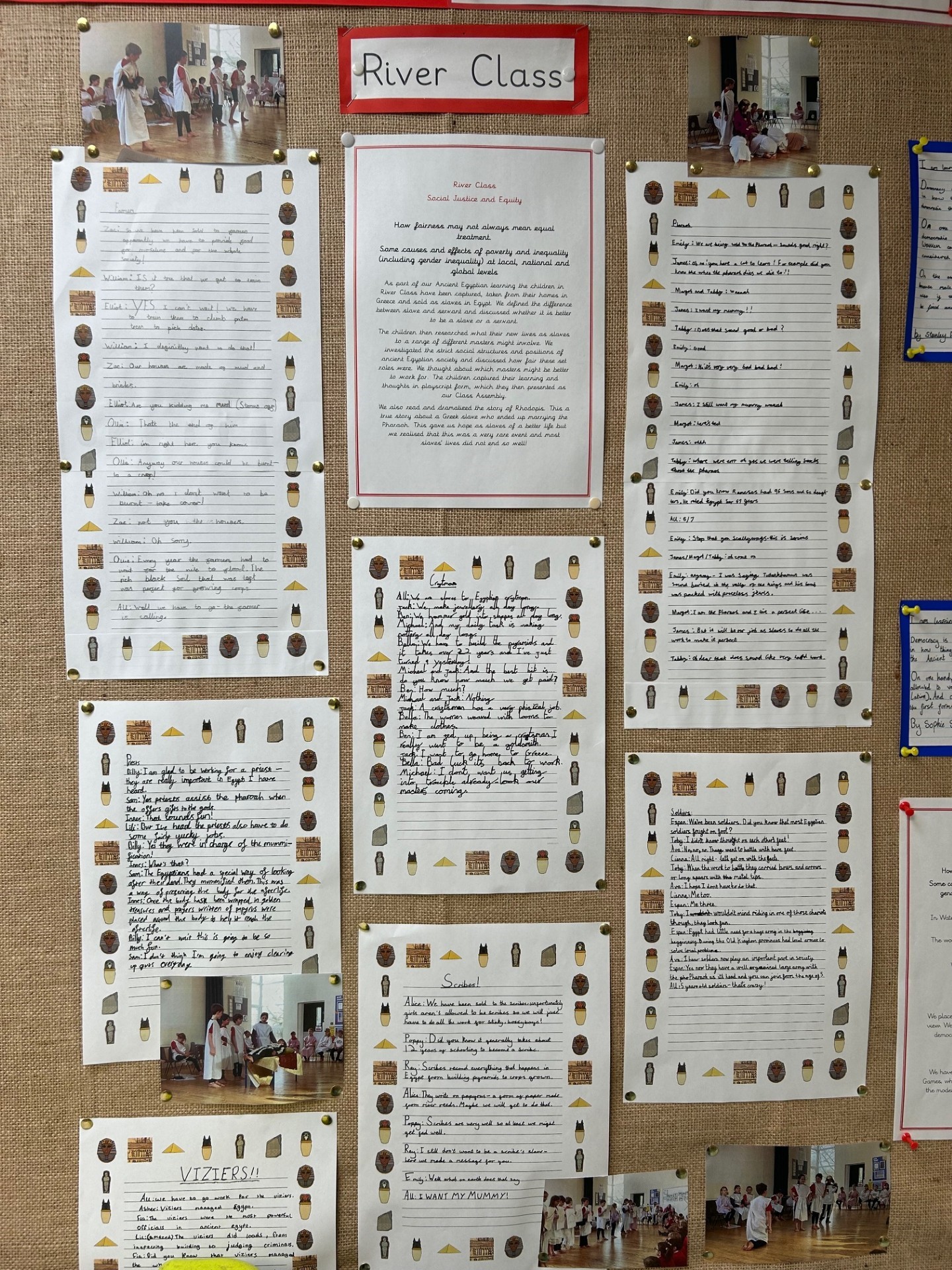
In River Class (Year 4) the children imagined they had been captured, taken from their homes in Greece and sold as slaves in Egypt. They researched what live as a slave for a range of different masters would be like and created playscripts which they performed in a wonderful family assembly.
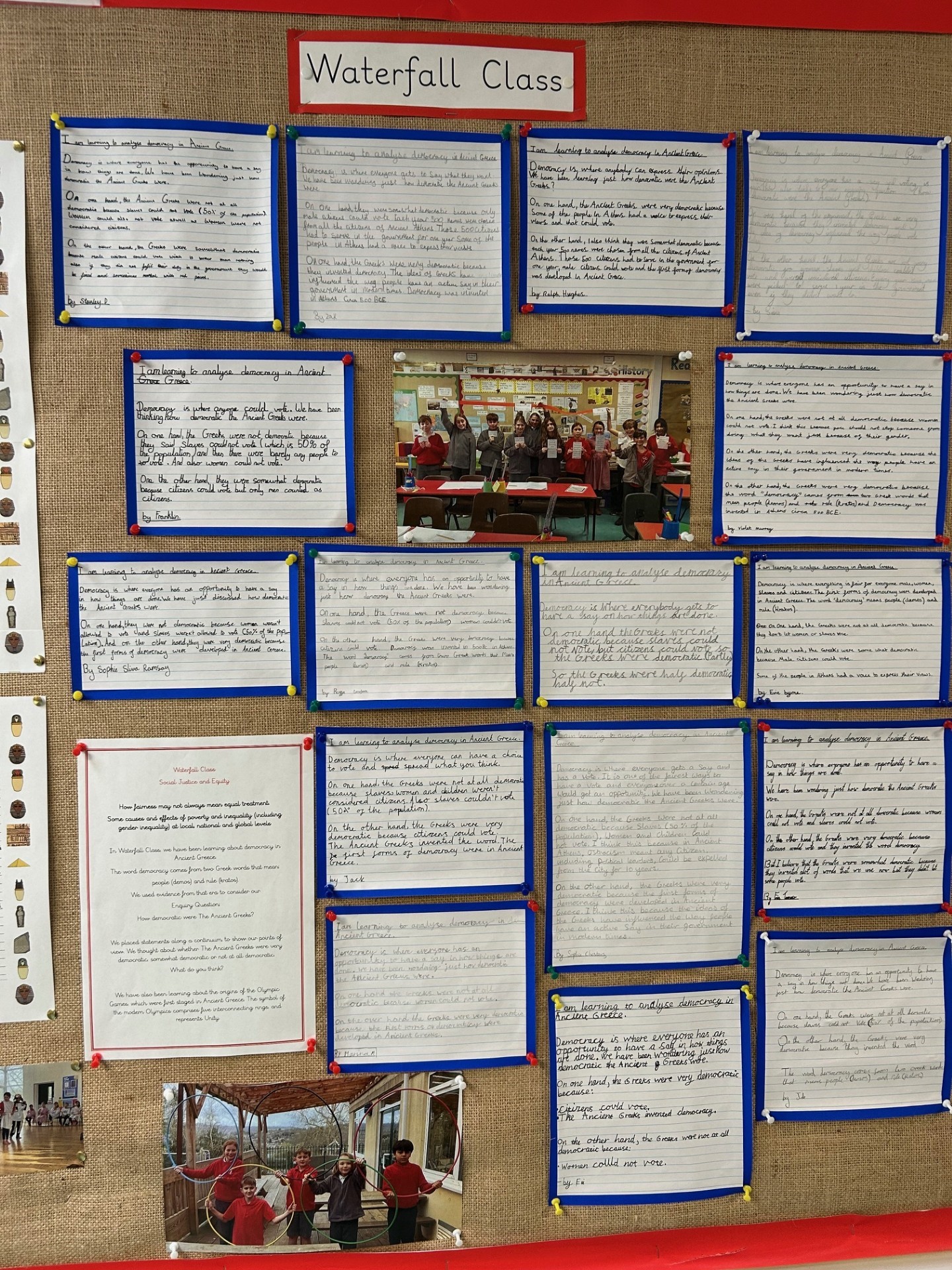
In Waterfall Class (Year 5) as part of their learning on Ancient Greece, children debated how democratic the Ancient Greeks were, placing statements along a continuum of very democatic, somewhat democratic or not at all democratic.